




Temperature sensors play an essential role in industrial automation, HVAC systems, automotive electronics, medical equipment, and household appliances. By converting temperature changes into measurable electrical signals, these devices help engineers monitor operating conditions, improve energy efficiency, and protect equipment from overheating.
Different applications require different sensing technologies. Understanding the working principles and characteristics of common temperature sensors is the first step toward selecting the right solution.
What Is a Temperature Sensor?
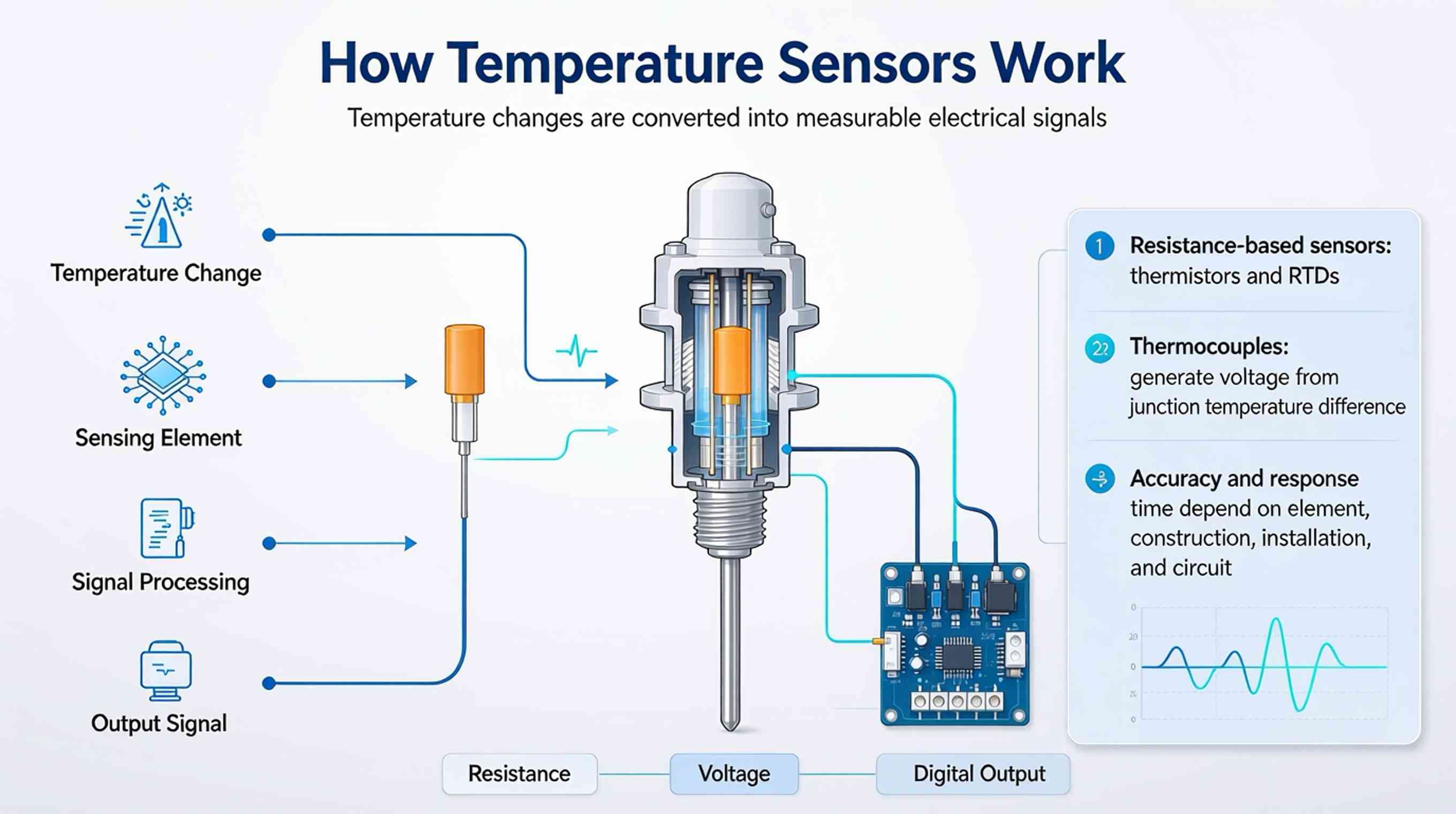
A temperature sensor is a device that detects temperature and converts it into a measurable signal, such as resistance, voltage, or a digital output.
Temperature sensors are widely used in heating and cooling systems, battery thermal management, industrial machinery, and electronic devices. Depending on the application, they may provide continuous temperature measurements, support automatic temperature control, or trigger protective actions when abnormal conditions occur.
How Do Temperature Sensors Work?
Temperature sensors operate by detecting physical or electrical changes associated with temperature.
Resistance-based sensors, including thermistors and resistance temperature detectors (RTDs), measure temperature through changes in electrical resistance. Thermocouples generate a voltage based on the temperature difference between two junctions made from dissimilar conductive materials.
The measurement signal is processed by a controller or electronic circuit to determine the temperature. The accuracy and response time depend on the sensing element, sensor construction, installation method, and measurement circuit.
Common Types of Temperature Sensors
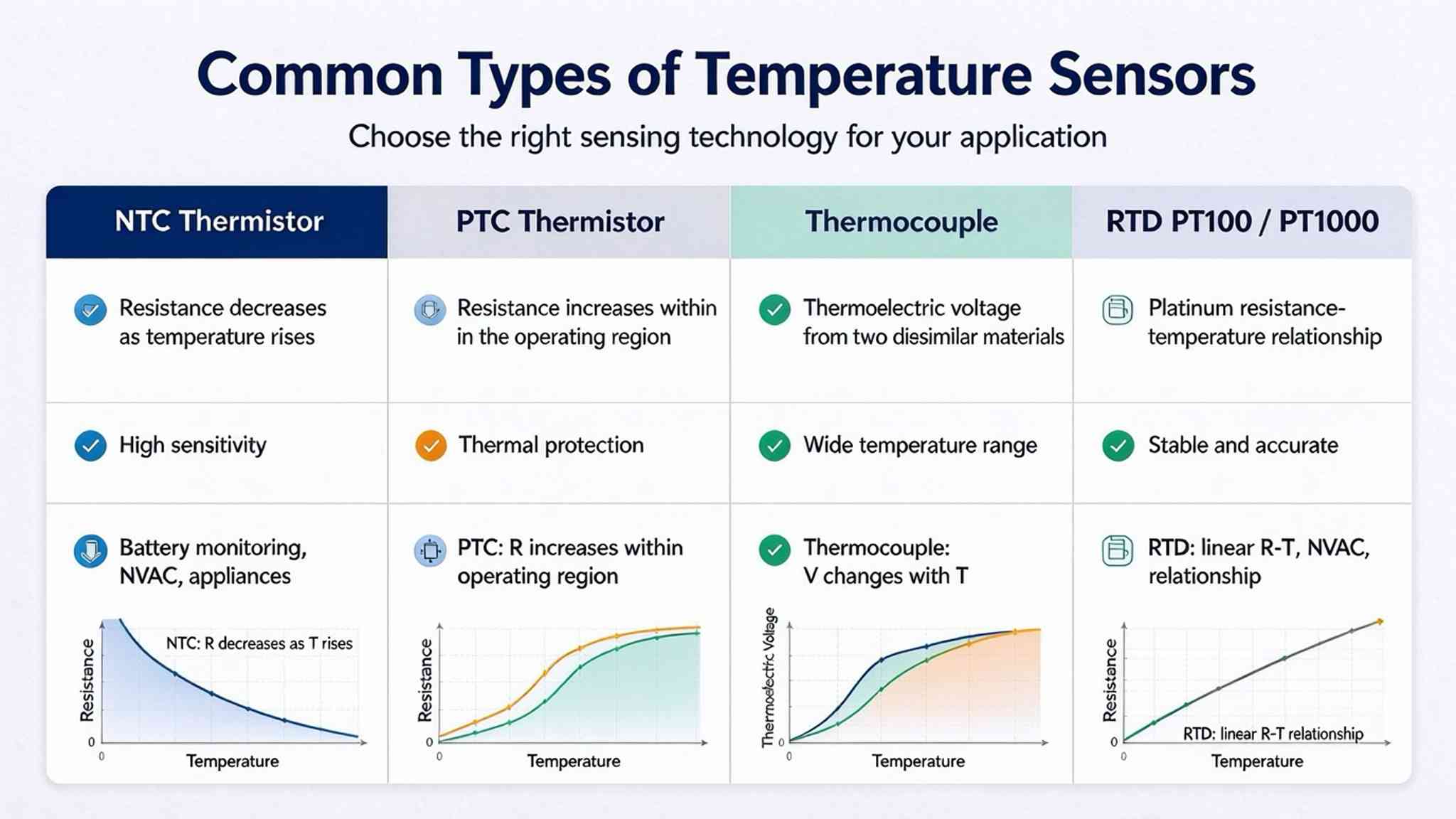
NTC Thermistors
NTC thermistors have a negative temperature coefficient, meaning their resistance decreases as temperature increases. They offer high sensitivity, compact dimensions, and flexible integration options.
Common applications include air conditioners, refrigerators, water heaters, automotive systems, and battery temperature monitoring.
PTC Thermistors
PTC thermistors generally exhibit increasing resistance as temperature rises within their specified operating region. They are commonly used for thermal protection, temperature-dependent switching, and motor overheat monitoring.
Their performance depends on the selected switching characteristics and the requirements of the protection circuit.
Thermocouple Temperature Sensors
Thermocouples measure temperature through the thermoelectric voltage generated by two dissimilar conductive materials. They are widely used in industrial heating equipment, ovens, furnaces, and manufacturing processes.
Different thermocouple types offer different temperature ranges and measurement characteristics. Selection should consider the operating environment, probe materials, response time, and accuracy requirements.
RTD Temperature Sensors: PT100 and PT1000
RTD sensors use the predictable resistance-temperature relationship of materials such as platinum. PT100 sensors have a nominal resistance of 100 ohms at 0°C, while PT1000 sensors have a nominal resistance of 1,000 ohms at 0°C.
They are commonly used in industrial process control, HVAC equipment, laboratory instruments, and applications requiring stable temperature measurements.
Applications of Temperature Sensors
Temperature sensors support a wide range of industries, with each application placing different demands on sensor performance.
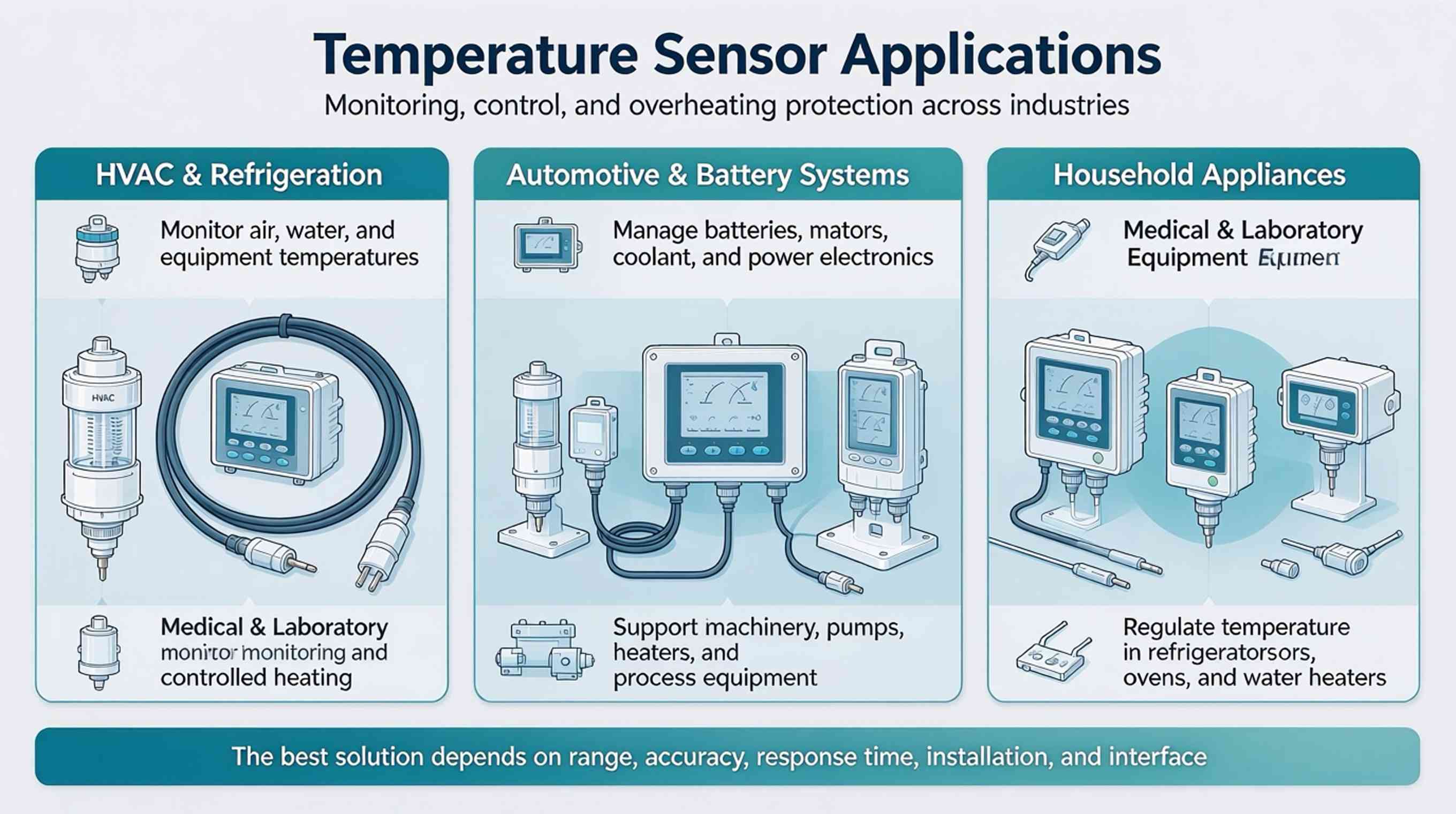
HVAC and refrigeration: Sensors monitor air, water, and equipment temperatures to support heating and cooling control.
Automotive and battery systems: Temperature sensors monitor batteries, motors, coolant, and power electronics to support thermal management and equipment protection.
Industrial automation: Thermistors, RTDs, and thermocouples are used in machinery, pumps, processing equipment, and industrial heating systems.
Medical and laboratory equipment: Temperature sensors support temperature monitoring in instruments, sample storage equipment, and controlled heating systems.
Household appliances: Sensors help regulate temperature in refrigerators, ovens, water heaters, and other temperature-controlled devices.
The most suitable sensor depends on the required temperature range, accuracy, response time, installation conditions, and electrical interface.
How to Choose the Right Temperature Sensor
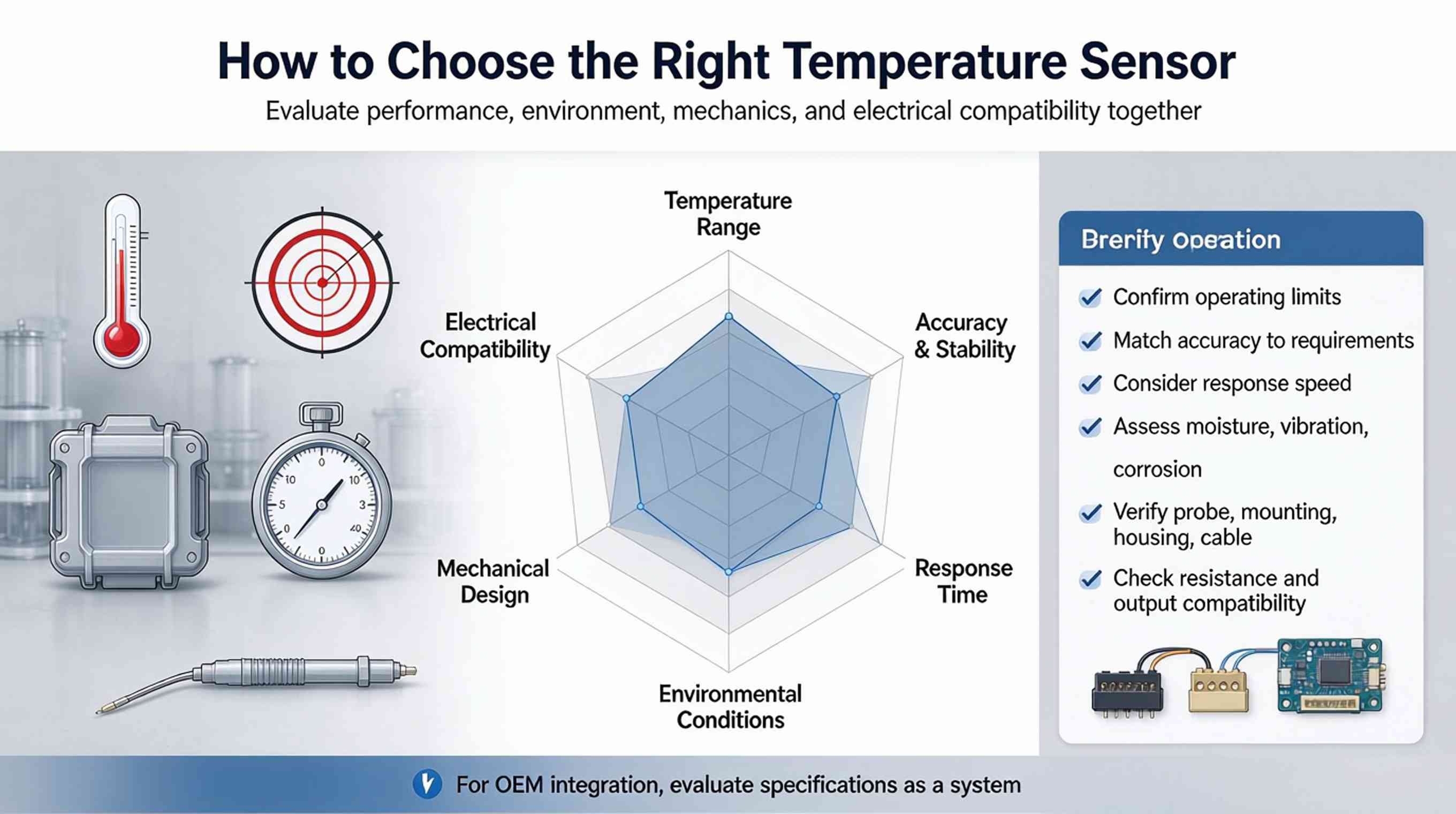
Selecting a temperature sensor requires more than comparing product prices. Engineers should evaluate several important factors.
Temperature range: Confirm that the sensor can operate reliably within the required temperature limits.
Accuracy and stability: Match measurement performance to the application's requirements.
Response time: Consider how quickly the sensor must detect temperature changes.
Environmental conditions: Evaluate moisture, vibration, corrosion, and other potential influences.
Mechanical design: Confirm probe dimensions, mounting structure, housing materials, and cable configuration.
Electrical compatibility: Ensure that the sensor's resistance characteristics or output signal match the measurement circuit.
For OEM equipment manufacturers, these factors should be evaluated together to ensure reliable integration into the final product.
Standard Temperature Sensors and Customized Solutions
Standard temperature sensors meet many general measurement requirements. However, some applications require specific probe dimensions, cable lengths, connector types, resistance values, or protective housing materials.
Customized temperature sensor solutions can help address these requirements.
For example, an automotive project may require a compact NTC sensor with a specialized mounting structure, while an industrial heating system may need a thermocouple probe designed for elevated temperatures.
A successful customization project typically begins with clear technical specifications, followed by sample evaluation and application testing.
Working closely with a sensor manufacturer during product development can help equipment manufacturers identify suitable configurations and reduce integration challenges.
Focus Sensing Temperature Sensor Solutions
Focus Sensing and Control Technology Co., Ltd. provides temperature, humidity, level, and position sensing solutions for industrial and commercial applications.
Its temperature sensor product range includes NTC thermistors, PTC thermistors, RTDs, and thermocouples for different measurement and control requirements.
For OEM and ODM projects, customers can discuss application conditions, sensing element specifications, probe structures, cable assemblies, and other customization requirements with the engineering team.
Whether you are developing HVAC equipment, automotive components, battery thermal management systems, or industrial machinery, selecting the right sensing solution is an important step toward reliable product performance.
Looking for a temperature sensor for your application?
Contact Focus Sensing to discuss your technical requirements and explore suitable temperature sensing solutions for your project.
Frequently Asked Questions
Which temperature sensor is best for industrial applications?
The answer depends on the application. Thermocouples are often used for high-temperature measurement, RTDs for stable and accurate measurements, and NTC thermistors for sensitive temperature monitoring.
What is the difference between NTC and PTC thermistors?
NTC thermistors generally decrease in resistance as temperature increases, while PTC thermistors increase in resistance within their specified operating region.
Can temperature sensors be customized?
Yes. Depending on the manufacturer's capabilities, customization may include probe dimensions, housing materials, cable length, electrical characteristics, and installation structures.
Conclusion
Temperature sensors are essential components in modern industrial and commercial equipment. Understanding the differences between NTC thermistors, PTC thermistors, thermocouples, and RTDs helps engineers make informed decisions based on measurement requirements and operating conditions.
For equipment manufacturers, combining appropriate sensor selection with application-specific testing and customization can improve system integration and support long-term reliability.

Expert for Thermistors Temperature Sensors Humidity Sensors Level Sensors ; Reliable but flexible custom products development
100+ Sensing Solutions Developed Annually for Different Applications
80+ Countries Customers Serviced


